Tate Sanskar Kendra Ahmedabad, India. (2026)
Academic Exercise
Heritage Adaptive Reuse Project
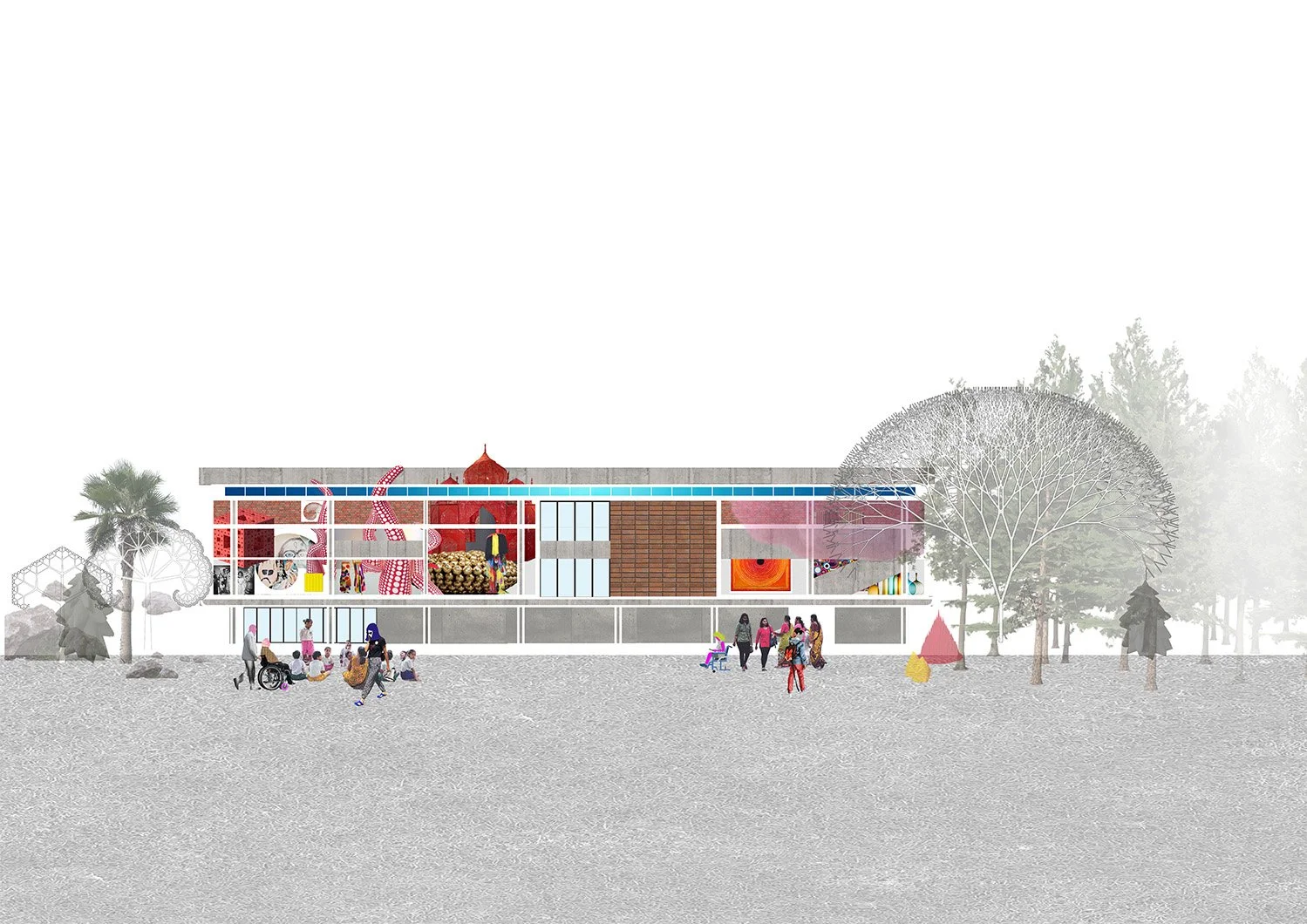
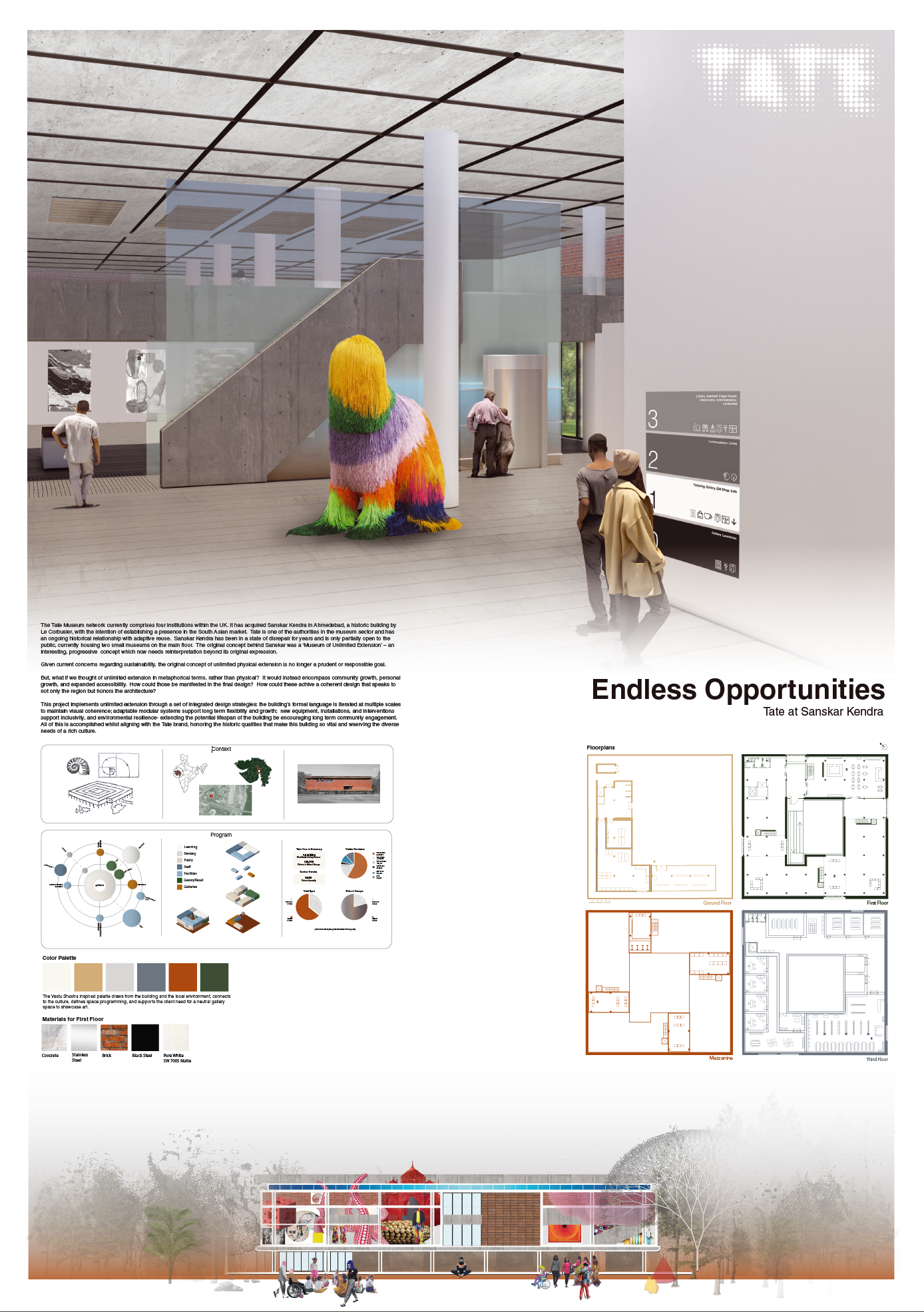
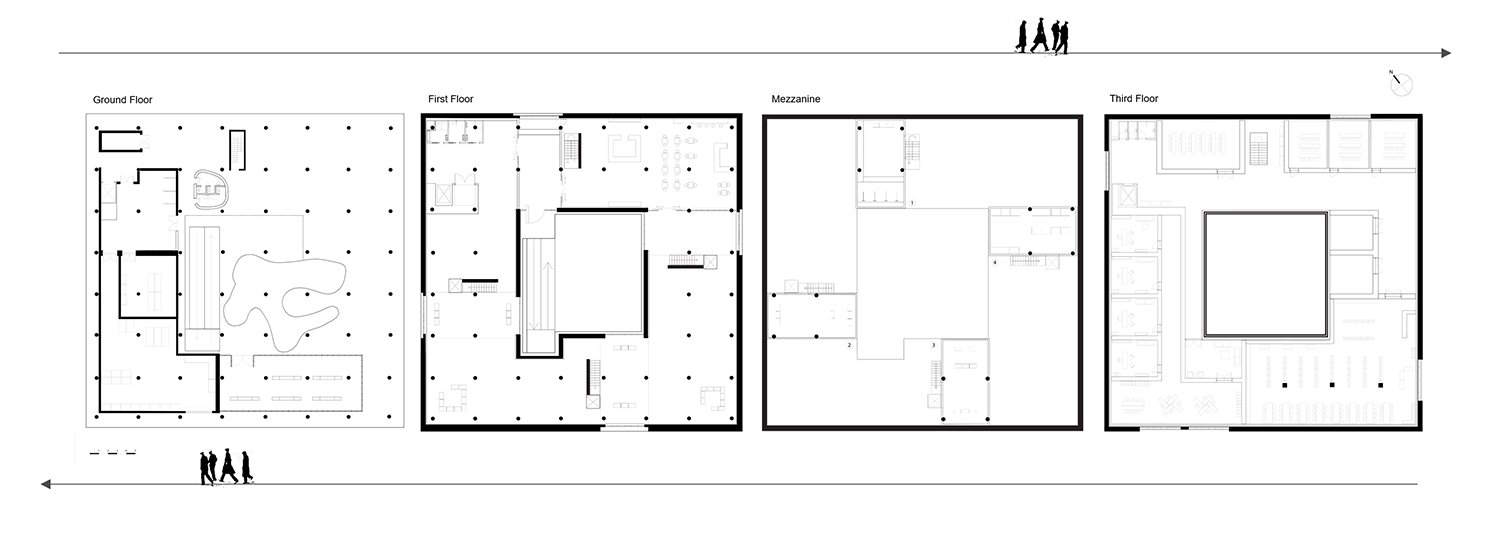
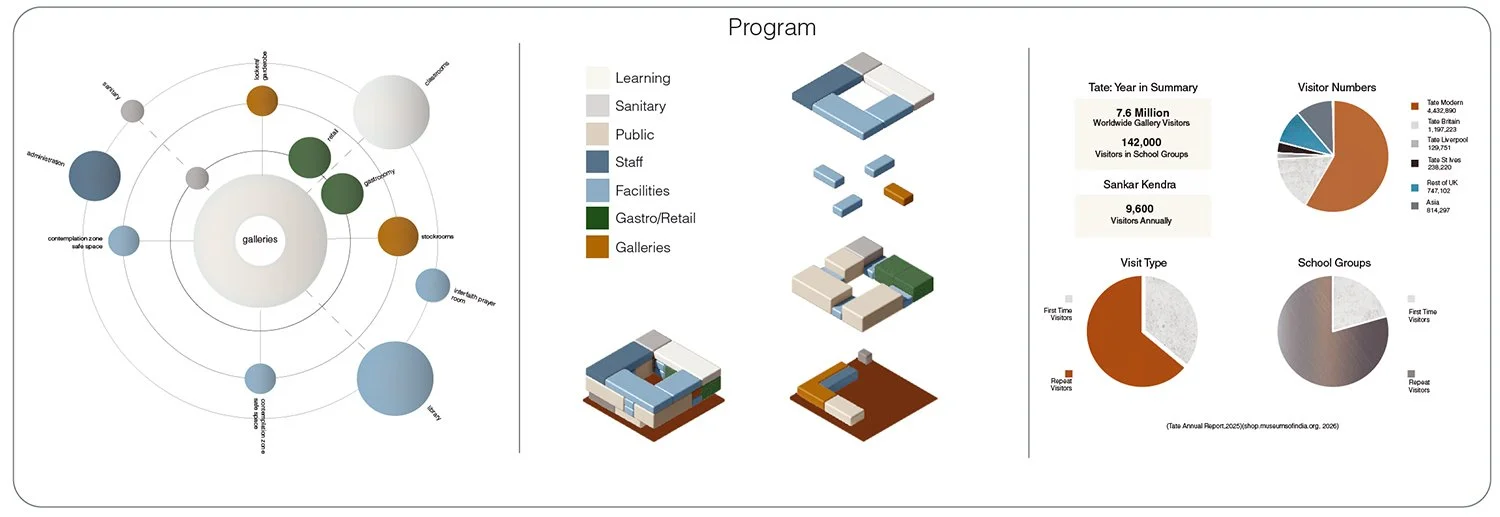
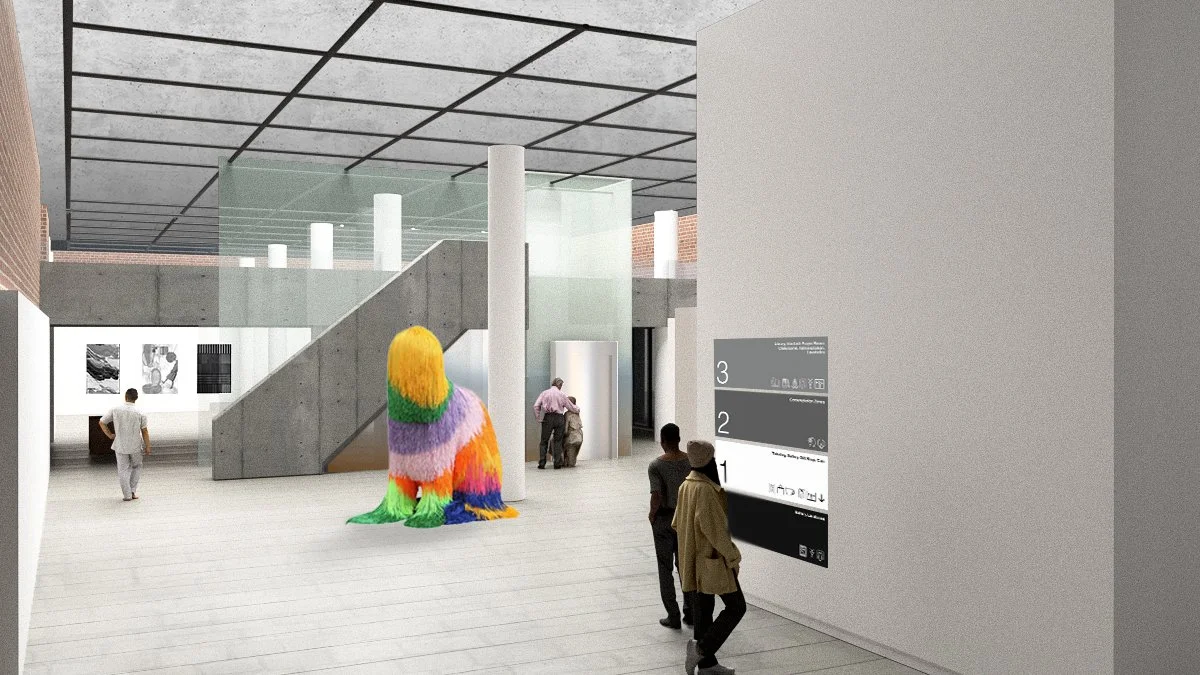
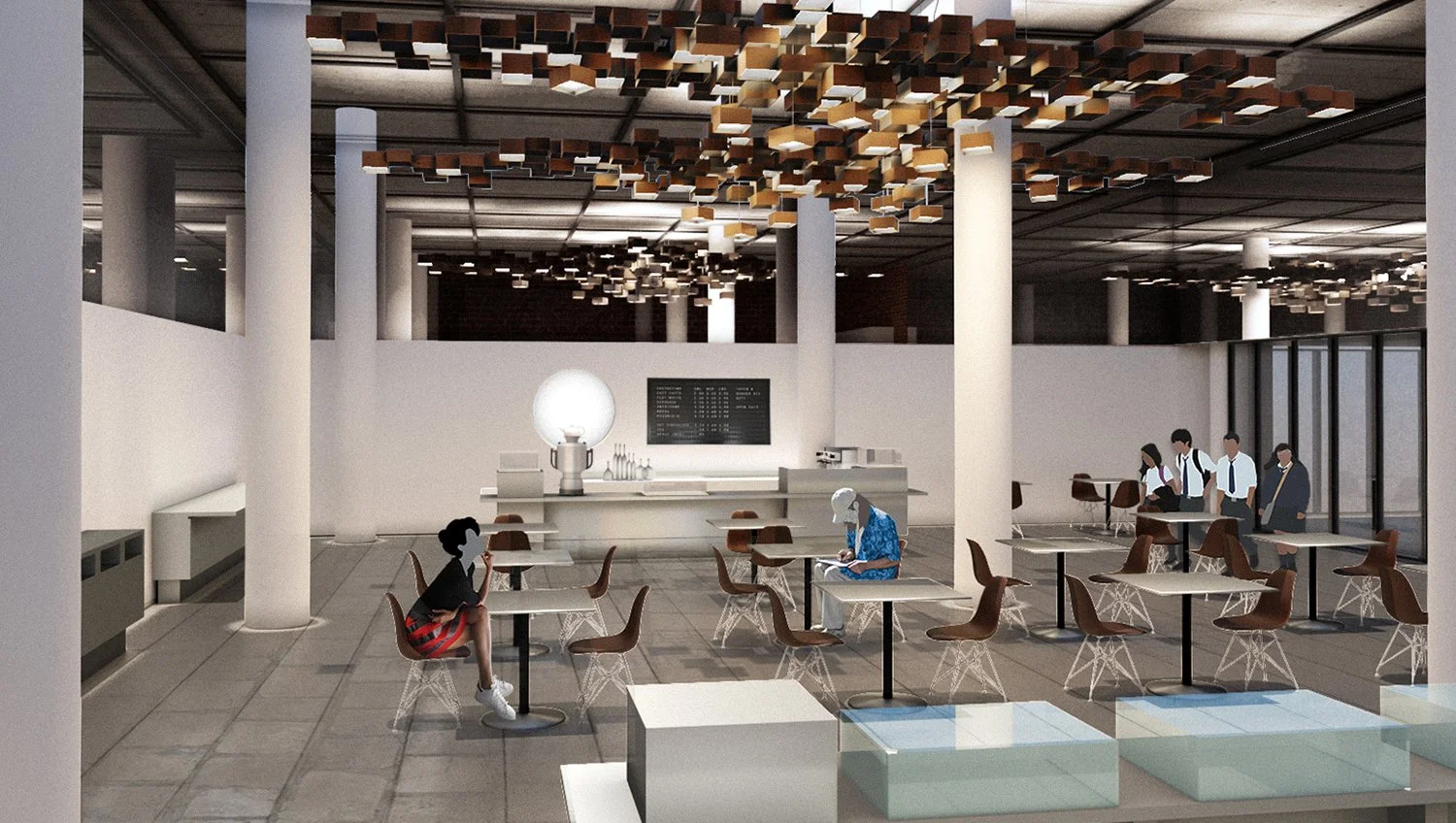
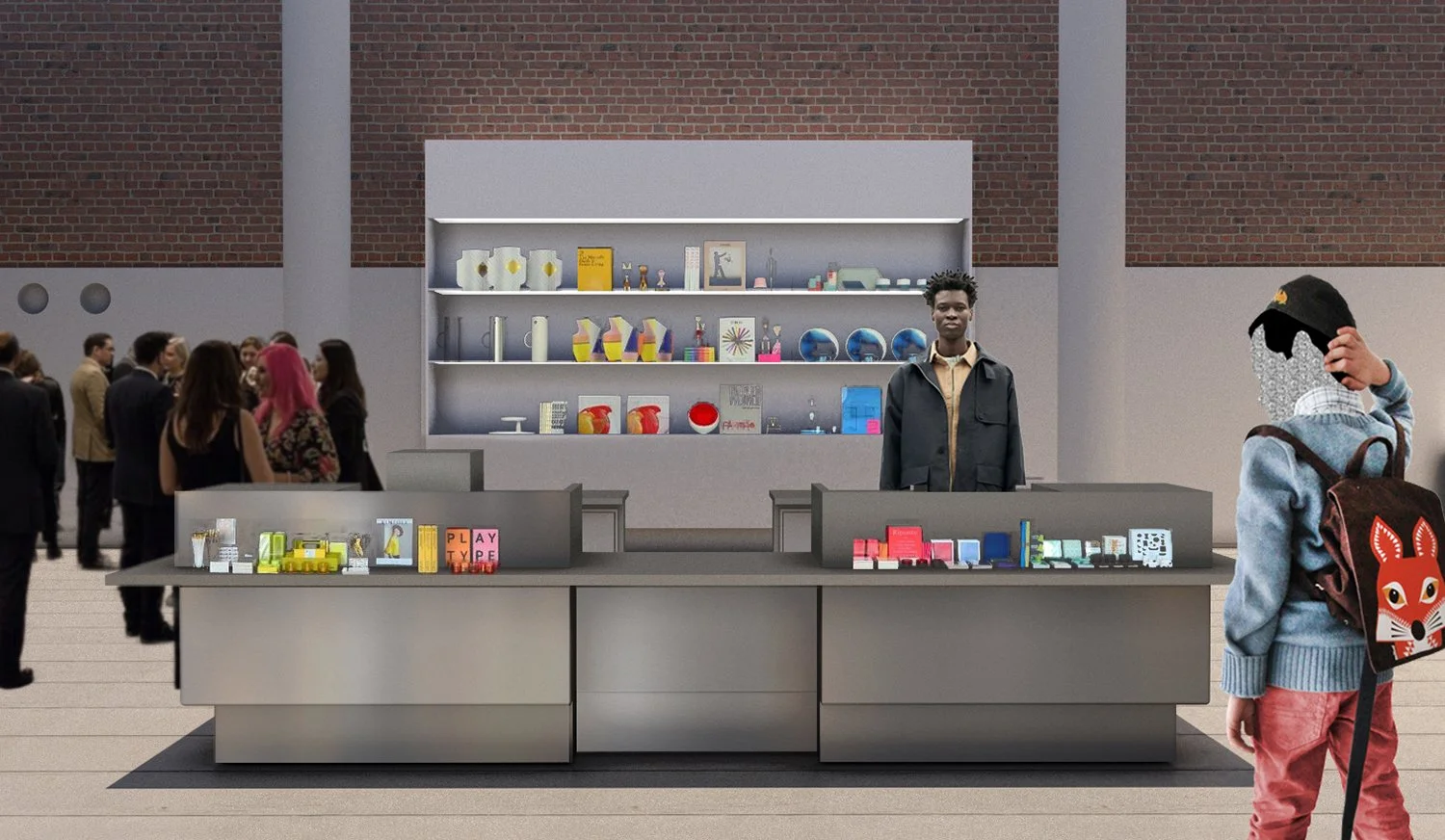
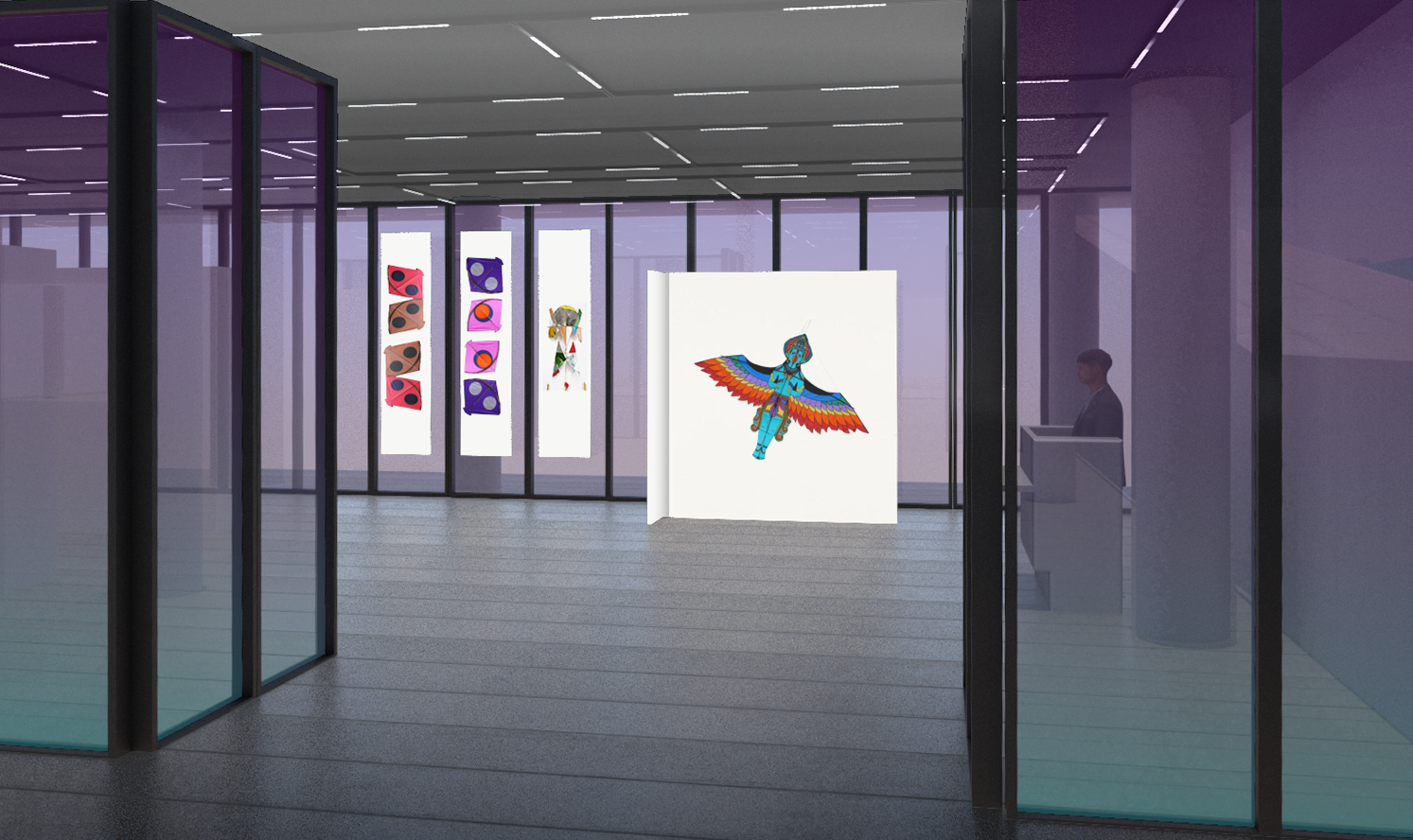
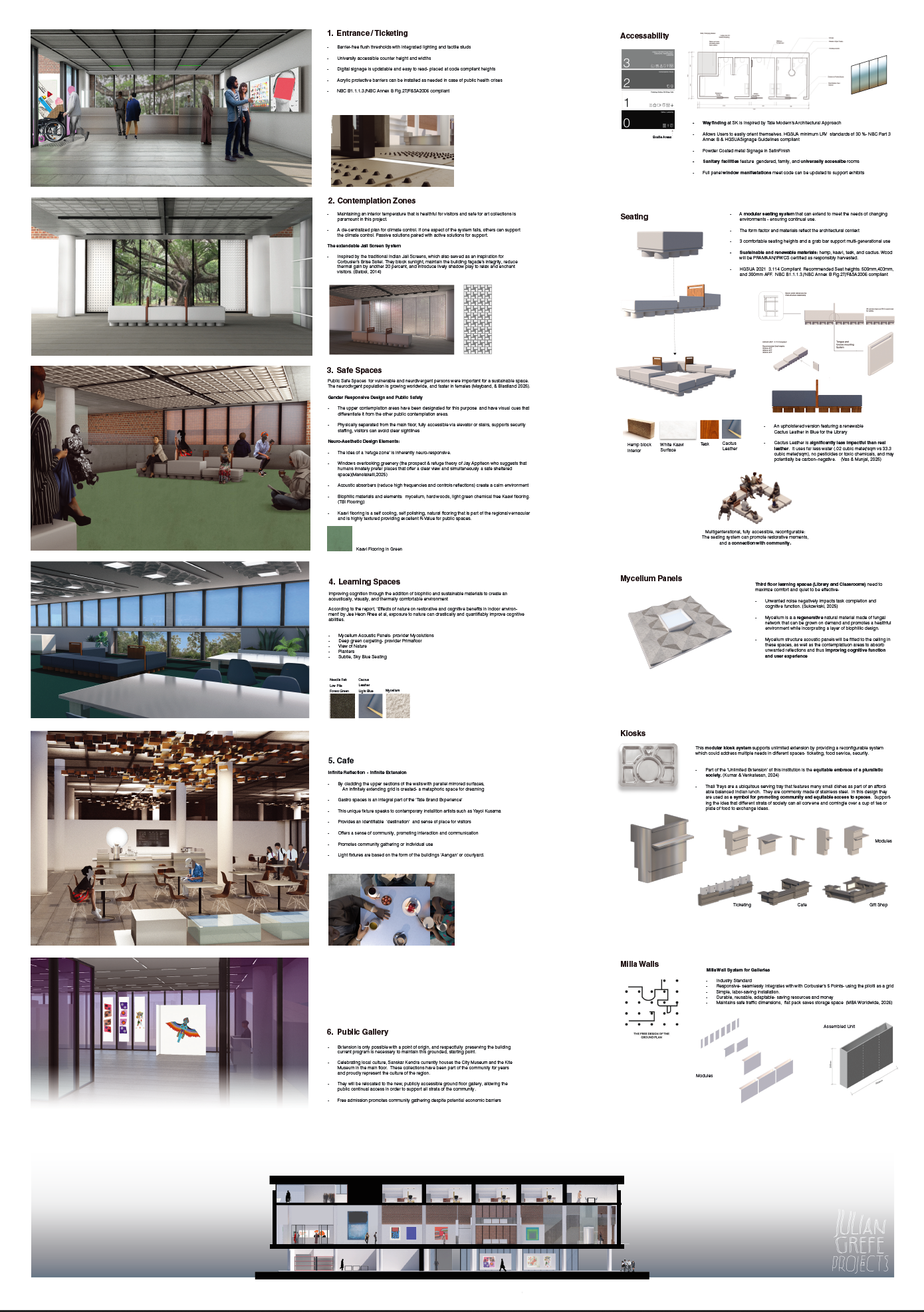
The Tate Museum network currently comprises four institutions within the UK. Tate is one of the authorities in the museum sector and has an ongoing historical relationship with adaptive reuse. Sanskar Kendra has been in a state of disrepair for years and is only partially open to the public, currently housing two small museums on the main floor. The original concept behind Sanskar was a ‘Museum of Unlimited Extension’ – an interesting, progressive concept which now needs reinterpretation beyond its original expression.
What we thought of unlimited extension in metaphorical terms, rather than physical? It would instead encompass community growth, personal growth, and expanded accessibility. How could those be manifested in the final design? How could these achieve a coherent design that speaks to not only the region but honors the architecture?
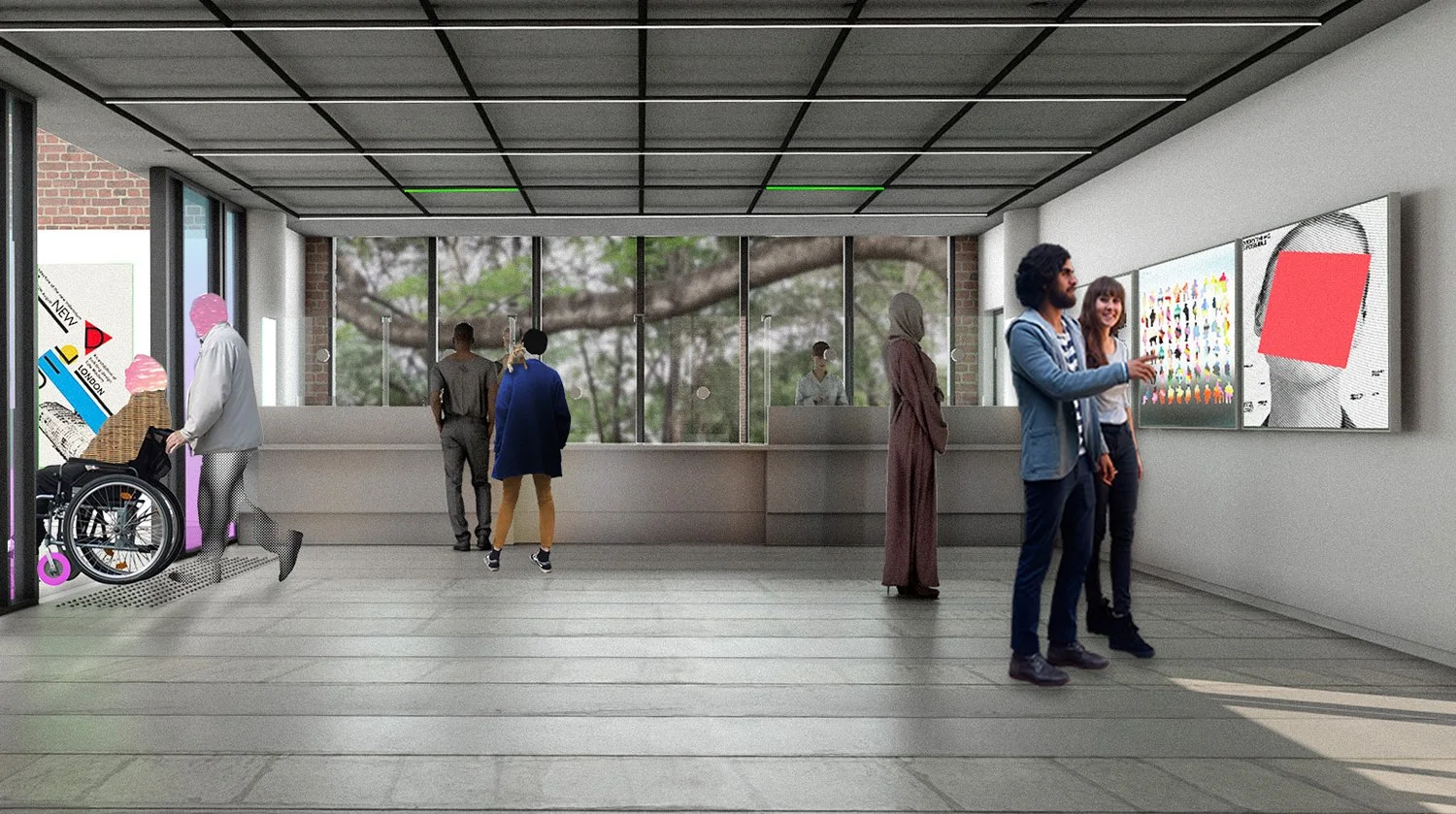
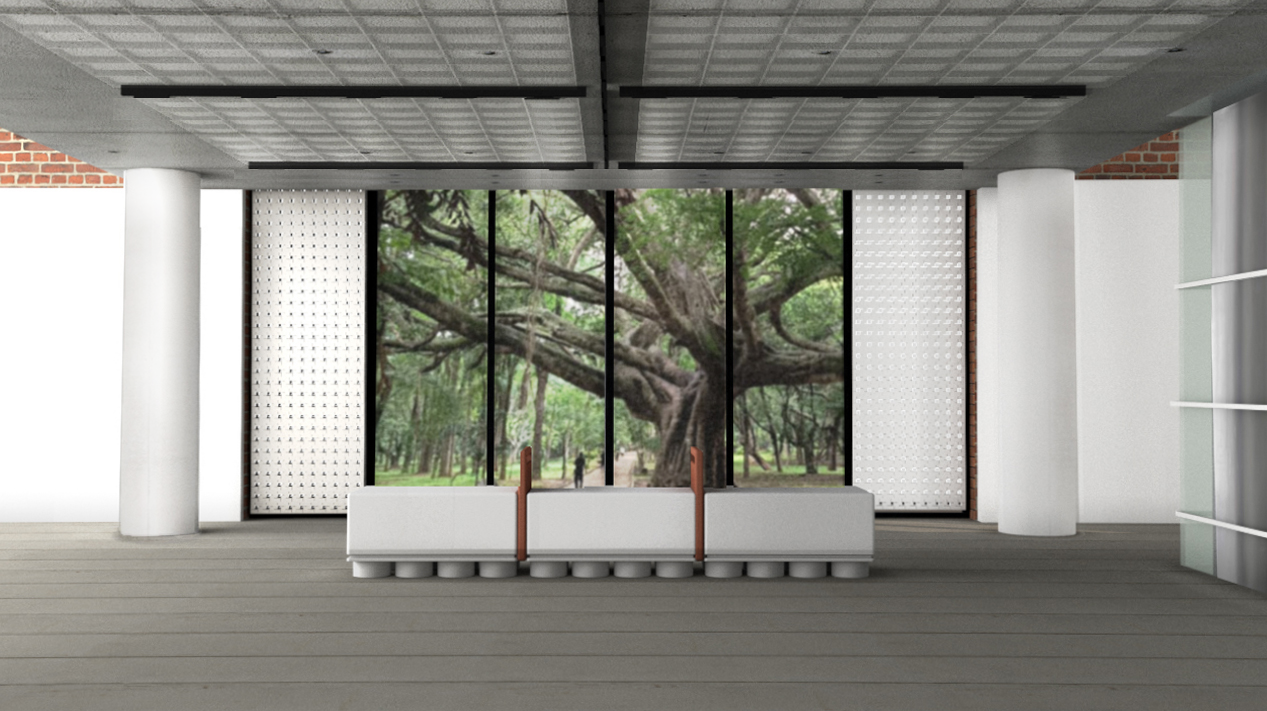
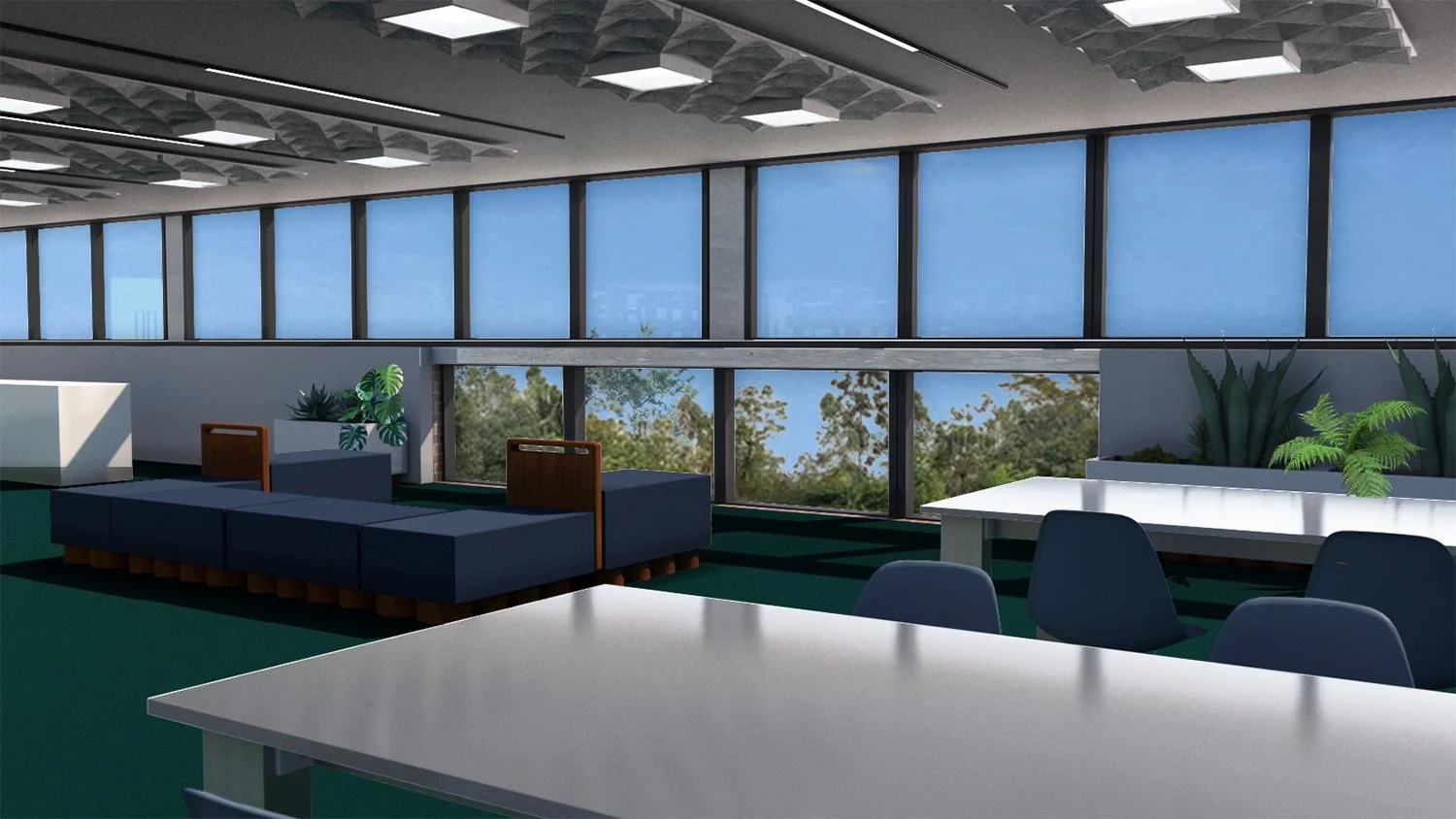
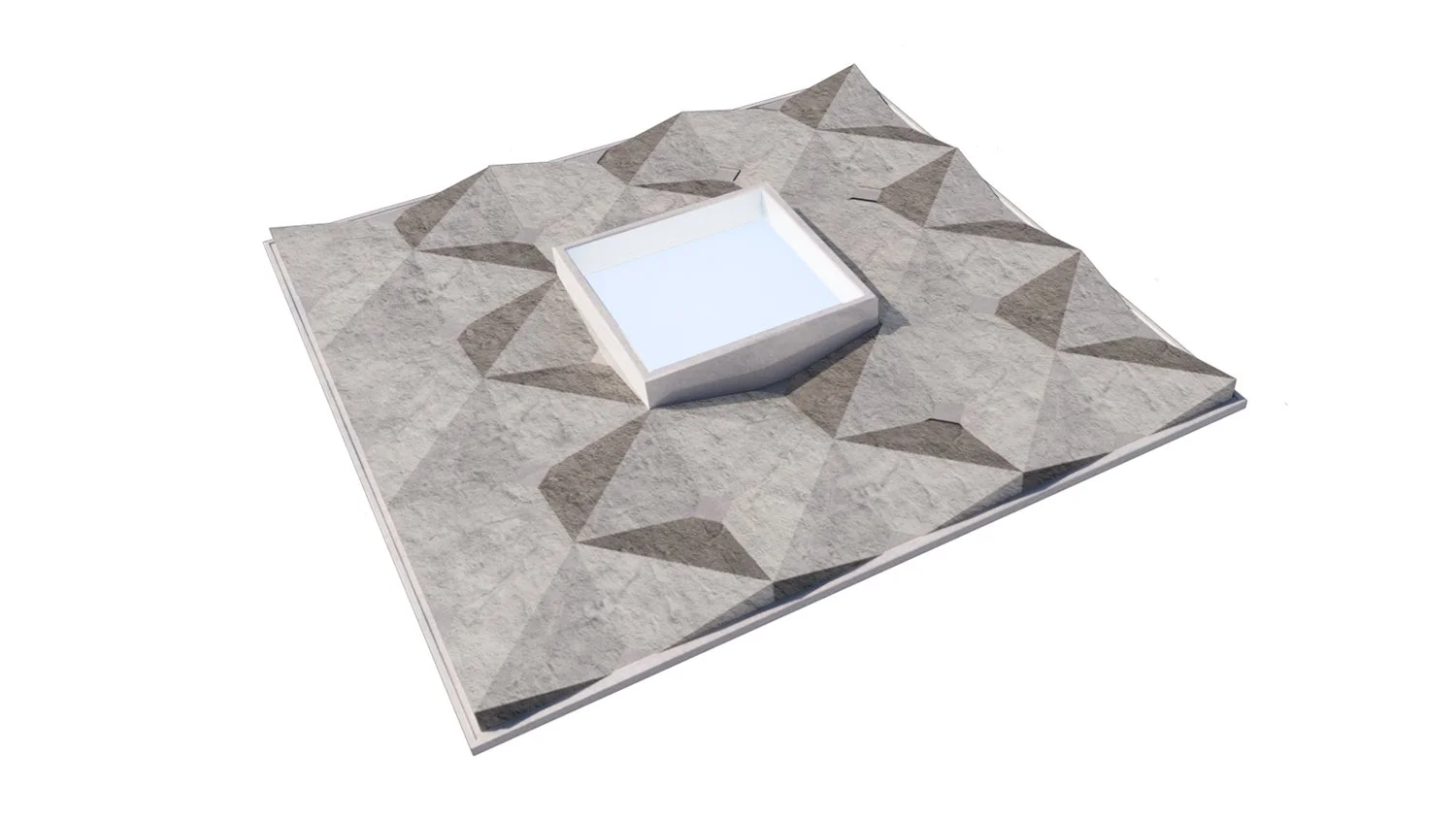
This project implements unlimited extension through a set of integrated design strategies: the building’s formal language is iterated at multiple scales to maintain visual coherence; adaptable modular systems support long term flexibility and growth; new equipment, installations, and interventions support inclusivity, and environmental resilience- extending the potential lifespan of the building be encouraging long term community engagement. All of this is accomplished whilst aligning with the Tate brand, honoring the historic qualities that make this building so vital and serving the diverse needs of a rich culture.
Visualizations by Julian Grefe